Artikel: How Art of Boats Brings Coastal Character Indoors
How Art of Boats Brings Coastal Character Indoors
The appeal of boats art isn't limited to homes beside the water. A vessel's silhouette, the suggestion of a harbor and the space around a hull can bring coastal character to a city apartment just as convincingly as a seaside living room. The most successful arrangements feel personal rather than themed: a boat you recognize, a journey you remember or a composition that gives your room breathing space.
Start with the artwork, not the nautical accessories. Historic passenger vessels and maritime illustrations offer enough character to anchor a room without adding ropes, shells or decorative anchors.
The Story Behind a Coastal Vessel
Boat pictures carry more than a view of the sea. Passenger vessels suggest everyday journeys, island communities and the relationship between a coastline and the people who travel along it. Their distinctive profiles also give transport enthusiasts something specific to appreciate beyond a general beach scene.
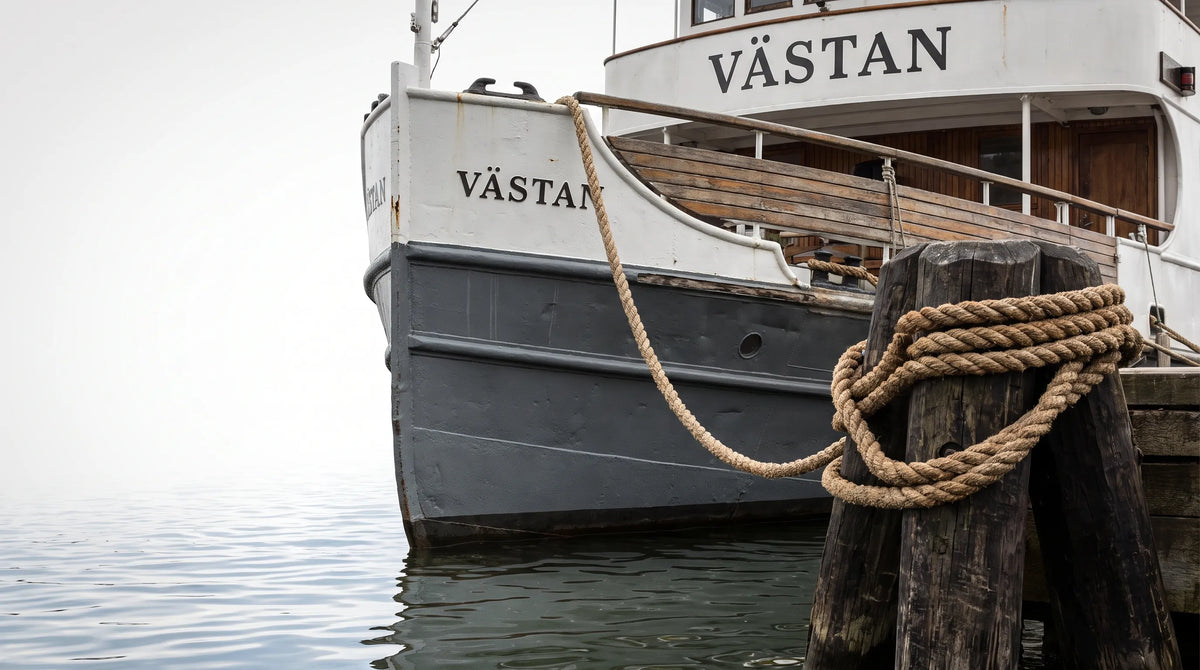
Transit Art's M/S Västan canvas depicts a Swedish coastal vessel dating to 1900 that continues to sail in the Swedish archipelago. The artwork is based on an original gouache painting by Sune Envall. Gouache is an opaque, water-based painting medium, making this a different artistic starting point from a photographic seascape.
For someone who enjoys ferries, coastal travel or historic transport, that identifiable subject adds emotional value. The image can recall a journey or spark curiosity about a vessel's working life. For an interior design enthusiast, it offers a figurative subject with a story, rather than an anonymous decorative motif.
Decorating with boats art Without Nautical Clichés
A coastal interior doesn't need to reproduce a beach house. It can borrow the qualities associated with the coast: openness, natural textures and a restrained palette. Maritime artwork supplies the subject, while the surrounding furnishings keep the room contemporary.
The distinction matters in homes where several interests share the same space. A boat print can sit comfortably beside books, ceramics and modern furniture without turning every object into part of a maritime theme.
Build the Palette Around the Actual Print
Look closely at the artwork before choosing cushions or a frame. Identify its background tone, its darkest area and one accent color. Those three observations are more useful than assuming that every coastal picture requires navy and white.
If the work contains cool water tones, warm wood can stop the room from feeling chilly. If its dominant colors are muted or warm, pale walls and simple upholstery can preserve that softness. Repeat an accent sparingly, perhaps in one cushion or a small ceramic vessel, rather than matching every accessory.
| Existing room palette | A useful styling approach | What to avoid |
|---|---|---|
| Warm white and oak | Keep nearby objects simple and let the vessel become the focal point | Adding nautical props around every surface |
| Gray and charcoal | Consider a pale mat to separate the image from darker surroundings | Choosing a frame that disappears into the wall |
| Cream and terracotta | Look for a compatible warm detail in the selected artwork | Assuming blue must be introduced |
| Blue and white | Add wood or linen for texture | Repeating stripes throughout the room |
When choosing boats art, let the particular image guide the palette instead of decorating around a generic idea of the sea.
Give the Artwork Enough Space
Scale affects whether a print feels intentional or looks lost. Above a sofa or sideboard, measure the available wall and the furniture beneath it before selecting a size. As a starting point, try an arrangement spanning roughly two-thirds of the furniture's width, then adjust for windows, lamps and other nearby objects.
Use paper templates to test the outer dimensions, including the frame. This is especially helpful when a boat illustration has generous empty space within its composition: the image may feel quieter than another artwork of the same dimensions.
For placement above furniture, a gap of around 6 to 8 inches can be a useful starting point. It isn't a fixed rule. A tall lamp, a high-backed sofa or an unusually low sideboard may call for a different position.
A single substantial piece often suits a small room better than several scattered prints. In a larger space, a pair can create rhythm, provided both works remain readable from the main seating position.
Choose Materials That Support the Mood
The frame around boats art should support the image rather than compete with it. Pale wood can connect with Scandinavian-style furnishings, while a restrained dark frame can give a vessel's outline more definition. Neither choice is automatically correct; compare the frame against both the artwork and the wall.
A canvas offers another presentation option, particularly when you want the painting itself to remain the main visual element. Compare its listed dimensions and product images with those of framed posters before deciding how the pieces will sit together.
Protect either format from direct sunlight and damp conditions. Paper certification and print quality do not make an artwork immune to moisture or fading. For a bathroom, a drier adjacent hallway is usually a more cautious location than a wall exposed to regular steam.

Recommended Poster Pairings
Begin with a maritime pairing if your goal is a calm coastal room. If your household also loves motorsport, you can extend the collection into an adjoining area without pretending that racing posters are nautical art. Shared framing, deliberate spacing and a compatible palette can connect different transport subjects while allowing each its own identity.
S/S Bohuslän with the M/S Västan Canvas
The S/S Bohuslän poster offers a natural companion to the Västan artwork. Bohuslän is a Swedish coastal vessel built in 1914 that remains in service in the archipelago, so the two subjects share a meaningful regional and transport connection.
The product page describes the Bohuslän print as a Giclée reproduction on FSC-certified, 200 gsm museum-quality paper. Its poster format differs from the Västan canvas, giving you a choice between coordinating formats or introducing a measured contrast.
For a dining area or living room, compare the product images for compatible colors before ordering. If displaying canvas and framed paper together, use their outer dimensions to align their centers or establish a common lower edge.
A Quiet Maritime Piece with the 1963 Le Mans Poster
The 1963 24 Heures du Mans Swirling Speed Poster introduces a very different energy: a bright red number 24 racing car cuts through a swirling, clocklike track, surrounded by painterly golden tones and bold typography.
The clock motif connects naturally to endurance racing, where sustained pace and reliability matter alongside speed. Its busy composition makes it better suited to an adjoining desk area or reading corner than a wall intended to feel entirely restful.
In a mixed-interest home, boats art can remain the quieter living-room focal point while the Le Mans print gives the workspace a stronger sense of movement. Repeat the frame finish between the two areas, and borrow a warm accent only if it genuinely appears in your selected maritime artwork.
The Cremona Maserati Poster for an Adjacent Transport Gallery
The 1929 Circuito Automobilistico di Cremona Maserati Poster depicts a red number 36 Maserati with a fiery phoenix behind it. The racing subject and dramatic imagery appeal to viewers interested in early motorsport and expressive vintage poster design.
It pairs particularly well with the Le Mans poster through their red cars, historic racing themes and emphatic sense of motion. Keep this combination in a home office, hallway or dedicated enthusiast corner if you want the main coastal room to remain calm.
Together, the maritime and racing displays can express a broader interest in transport. They don't need to occupy the same wall to feel like parts of one considered home.
Frequently Asked Questions
Does boat artwork only suit coastal homes? No. A recognizable vessel can work in a city apartment, minimalist living room or traditional study. Its palette, scale and presentation usually matter more than the home's distance from the coast.
How do I choose boats art for a small room? Start with one clear focal point and measure the wall before selecting a size. Avoid crowding the picture with themed accessories. A simple frame and generous surrounding space help the arrangement feel composed.
Should boat prints have matching frames? Matching frames are useful when you want consistency, particularly across different subjects. They aren't essential. A canvas and a framed poster can work together when their dimensions, placement and visual weight are considered carefully.
Can maritime and automotive posters share a gallery wall? Yes, but choose a connection beyond the fact that both depict transport. A shared color, comparable graphic treatment or consistent framing can help. If the compositions compete, display them in neighboring zones instead.
Are historic vessel prints good gifts? They can be especially thoughtful for someone with a connection to a particular boat, region or coastal journey. Check the recipient's available wall space and preferred format rather than selecting solely by subject.
Choose a Coastal Story You Want to Live With
The strongest coastal rooms feel collected, not costumed. Begin with a vessel or painting that means something to you, give it enough space and let its colors influence a few surrounding details.
If your interests extend beyond the water, Transit Art's guide to curating an art collection around transit design offers a useful next step. A maritime focal point and a separate motorsport pairing can make a home feel coherent without asking every room to tell the same story.