Artikel: Choosing Canvas Prints for Wall Decor in a Sim Racing Room
Choosing Canvas Prints for Wall Decor in a Sim Racing Room
Searching for canvas prints wall decor for a sim racing room means balancing two priorities: expressing your love of motorsport and keeping the driving environment comfortable. The right artwork gives the room an identity without competing with your monitors, crowding the cockpit or disappearing behind the seat.
Start with the racing story you want to tell, then consider viewing angles, dimensions and lighting. A historic endurance-racing poster can bring character to a modern simulator setup, while a carefully positioned canvas adds texture to an otherwise equipment-heavy room. The strongest arrangement feels connected to the driver, not simply matched to the hardware.
Give Your Sim Racing Room a Motorsport Story
A room built around racing feels more personal when its artwork reflects something specific: a favorite circuit, an engineering era or the kind of competition you enjoy driving virtually.
The Nürburgring offers a particularly rich connection. Its 1000-kilometer race began in 1953, and endurance competition there demanded more than outright speed. Reliability, traffic management and sustained concentration mattered, qualities that endurance sim racers will recognize.
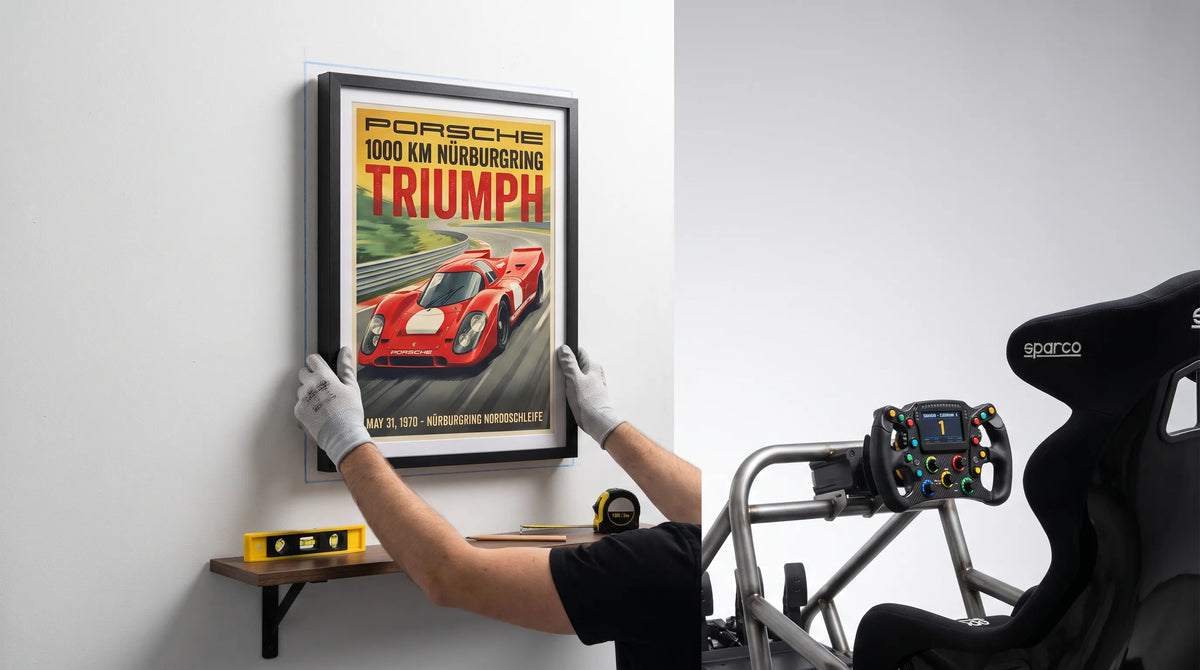
Transit Art’s Porsche 1000 km Nürburgring Triumph Poster captures that atmosphere through silver racing Spyders numbered 21 and 20 passing the pits. Crowds, flags and a timing tower establish the setting, while printed results emphasize class victories.
Porsche’s lightweight, open-cockpit Spyder racers became admired for their purposeful engineering and competition heritage. Their appeal extends beyond Porsche ownership: enthusiasts of endurance racing, historic circuits and mechanical design can all find something meaningful in this imagery.
For canvas prints used as wall decor, that narrative matters as much as color. A picture connected to your favorite racing discipline is more likely to remain satisfying after the novelty of a room makeover fades.
Canvas Prints Wall Decor: Plan Around the Driving Position
Choose the Wall From the Seat
Before measuring artwork, sit in your normal driving position with the monitors, wheel and seat adjusted. Identify which walls remain visible and which become hidden by equipment.
A side wall often offers the best balance: you can appreciate the artwork when entering the room without placing detailed imagery directly beside the racing display. The wall behind the seat works well as an entrance view or a background for video calls and streams.
Avoid placing important visual details where a tall seat back or monitor stand will cut through them. Leave access to ventilation, cable connections and adjustable components.
Measure the Usable Space, Not the Entire Wall
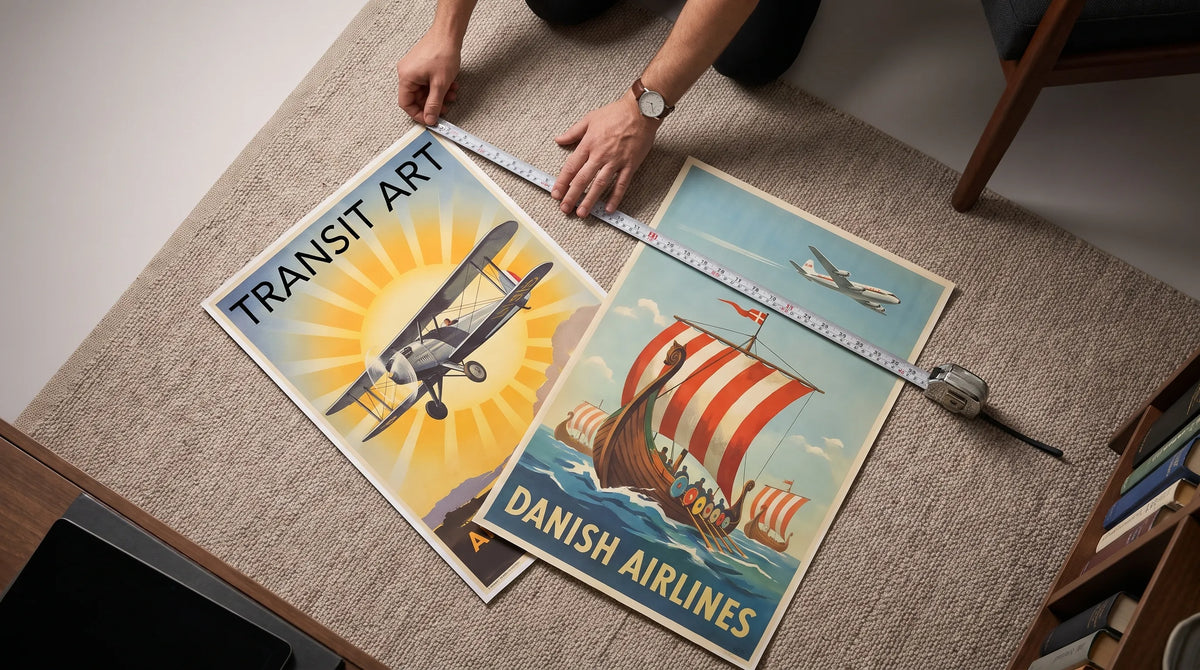
Mark the proposed outer dimensions with painter’s tape, testing the tape first on an inconspicuous area. Include any frame in those measurements. Then check the outline while seated, standing and moving around the rig.
| Location | What to measure | What to avoid |
|---|---|---|
| Beside the cockpit | Clear width between furniture, doors and equipment | Art squeezed against a monitor arm |
| Behind the seat | Visible area above and beside the seat back | A central subject hidden by the headrest |
| Above storage | Width of the cabinet and clearance above it | Artwork visually disconnected from the furniture |
| Along an access route | Walking clearance and canvas projection | Corners that shoulders or equipment could catch |
Treat any proportional sizing rule as a starting point, not a requirement. A taped outline tells you more about your particular room than a generic recommendation for a large canvas.
Choose Canvas or a Framed Poster Deliberately
Canvas and paper prints can both work in a simulator room, but they present racing imagery differently.
Canvas introduces a textured surface and can be displayed without glazing. Depending on its finish, this may reduce the sharp reflections associated with glass. It is not automatically reflection-free, however, so consider the actual coating and lighting conditions.
A paper poster offers another presentation option, especially for artwork with small lettering, timing information or printed race results. The Nürburgring Porsche design includes those details, making readability worth checking before choosing a size or display format.
The featured product is listed as a poster. Do not assume it is available as a canvas simply because the store also sells canvas wall art. Check the product’s current format and size options before ordering.
Check Cropping and Edge Treatment
When choosing canvas prints for wall decor, establish whether the stated dimensions describe the visible front face and how the edges are finished. A gallery wrap can carry imagery around the sides, potentially moving peripheral lettering or flags away from the front view.
Inspect the largest available preview and request clarification if the crop is unclear. You should not have to guess whether a driver, car number or line of results will remain fully visible.
Interior Design: Make the Artwork Part of the Room
Build a Restrained Color Palette
Most simulator setups already contain strong visual elements: dark equipment, exposed metal, cables and illuminated controls. Artwork does not need to compete with all of them.
For the Porsche poster, the silver cars offer a natural connection to metal pedals, wheel rims and cockpit components. Let the artwork supply the historical detail while nearby surfaces remain comparatively quiet. A neutral wall and consistent frame finish can make a complicated racing scene easier to appreciate.
For canvas prints used as wall decor, coordinate the overall warmth or coolness of the image rather than trying to match every accessory. A room feels more collected when its objects relate without becoming identical.
Test Lighting With the Simulator Running
Evaluate placement under the conditions in which you actually drive. Turn on the monitors and normal room lighting, then look for distracting reflections, bright patches and colored light spilling across the artwork.
Adjustable room lighting can help separate the artwork from the screen area. Avoid directing an exposed light source toward your eyes or across the monitors.
Canvas should also not be mistaken for acoustic treatment. A decorative stretched print is not a substitute for a tested acoustic panel if you are addressing echo or speaker performance.

Recommended Poster Pairings
A cohesive gallery wall needs a connection, but every image does not have to depict the same manufacturer. These combinations use the Nürburgring Porsche poster as the anchor and draw on other posters discussed in Transit Art’s decorating guides.
Porsche Nürburgring and Monaco Grand Prix 1958
Pair the Porsche endurance-racing subject with the Monaco Grand Prix 1958 poster featured in Transit Art’s guide to posters and canvas for a music listening room.
The connection is circuit culture: Nürburgring endurance racing alongside Monaco’s street-racing identity. This suits someone whose simulator sessions move between sports cars and single-seaters.
Place the pair along a side wall where both works can be seen together. Coordinate their outer frames and keep a consistent gap, rather than forcing differently proportioned images into matching print dimensions. Check the current product previews before deciding whether their colors suit your room.
Porsche Nürburgring and Mercedes-Benz 300 SLR
A Mercedes-Benz 300 SLR poster, featured in Transit Art’s motorsport gallery wall guide, creates a pairing centered on German sports-racing heritage.
Developed for the 1955 racing season, the 300 SLR represents another distinctive chapter in mid-century competition engineering. Paired with the Porsche imagery, it gives a room a broader historical focus rather than a single-brand theme.
This combination works particularly well above a storage cabinet holding racing books or model cars. When combining posters and canvas prints for wall decor, use alignment and spacing to create consistency even when the surfaces differ.
Check Quality, Installation and Total Cost
Before ordering, distinguish material claims from presentation choices. Transit Art describes FSC-certified paper printing among its offerings, but paper certification should not be interpreted as a specification for every canvas product. Read the details attached to the format you select.
Compare the complete installed cost: artwork, any frame, suitable hanging hardware, shipping and applicable taxes. Also check delivery estimates and return conditions, particularly for large pieces or gifts. Avoid assuming that every seller treats size changes or made-to-order items the same way.
For canvas prints used as wall decor near a simulator, secure installation matters. Select fixings appropriate to the wall construction and the artwork’s weight. Do not attach artwork to the cockpit or equipment that moves or transmits force-feedback vibration.
Renters should check both their lease and the mounting manufacturer’s limits. Adhesive systems are not suitable for every wall finish or canvas depth. If a secure installation is uncertain, choose another location or seek installation advice.
For ongoing care, follow the print supplier’s instructions. Keep artwork away from direct sunlight, damp areas and cleaning sprays used on nearby equipment.
Frequently Asked Questions
Should artwork go behind the monitors? It can, but check how much remains visible once the screens are in driving position. A side wall often provides a clearer view and less visual competition around the display.
Is canvas better than a framed poster for a sim racing room? Neither is universally better. Canvas offers texture and an unglazed presentation, while a framed poster may suit detailed racing graphics. Compare finish, readability, reflections and price.
How large should the artwork be? Measure the unobstructed wall area and test the full outer dimensions with a taped outline. Account for the seat, monitor movement, doors and walking routes before choosing a size.
Can I mix historic racing art with a modern simulator? Yes. Historic imagery can add context and personality to contemporary equipment. Repeated frame finishes or a restrained palette help connect the two.
Build Around the Racing You Enjoy
The most convincing sim racing room reflects its driver. Choose a racing story first, test the artwork’s dimensions around the cockpit and make sure the format suits both the image and the lighting.
Explore Transit Art’s automotive artwork with those measurements in hand. One well-positioned piece with a meaningful motorsport connection can give the room more character than a wall filled without a plan.