Artikel: Choosing Posters and Canvas for a Music Listening Room
Choosing Posters and Canvas for a Music Listening Room
The best art for a music listening room adds atmosphere without competing with the music. If you are comparing options after a search for “posters canvas,” the useful distinction is between framed paper prints and artwork printed on fabric. Each brings a different texture, finish and presence to the wall.
Start with the room you actually listen in: where you sit, where the speakers stand and how light falls across the walls. A vintage racing print can feel entirely at home beside a turntable and record shelves, provided its scale and placement support the space rather than crowd it.
Compare paper posters with canvas prints
Choose the format for its visual character, not an assumed improvement in sound. A standard canvas print is not an acoustic panel, and neither format should replace purpose-designed acoustic treatment.
Paper usually suits artwork with lettering, fine outlines and graphic detail. A frame and mat border give it a deliberate, collected appearance, especially alongside album sleeves and books. Canvas introduces a visible weave and, when stretched over a frame, a more substantial profile.
| Consideration | Paper poster | Canvas print |
|---|---|---|
| Surface | Depends on the paper and finish | Fabric texture remains part of the appearance |
| Display | Usually framed for protection and support | May be stretched, mounted or supplied unstretched |
| Reflections | Glazing can reflect lamps and windows | Often displayed without glazing, but coatings affect sheen |
| Fine detail | Smooth paper can suit small lettering and linework | Texture may be more noticeable in detailed areas |
| Additional costs | Frame, mat, glazing and hanging hardware | Stretching or framing if not included, plus hardware |
When comparing posters and canvas, check the finished dimensions as well as the image size. A generous mat can make a modest paper print occupy more wall space than a larger unframed canvas.
Read the material description carefully
“Canvas” should not leave you guessing. Establish whether the item is printed fabric, whether it arrives stretched and whether the edges carry part of the image. Paper with a canvas-like texture is a different product.
Likewise, a paper weight describes the stock, not the complete display. Check whether a frame is included and what the stated measurements cover. These details matter when fitting artwork between record shelves or above a low cabinet.
Why vintage motorsport art belongs beside a record collection
A music room does not need music-themed artwork on every wall. Many record collections are personal archives of design as much as sound: typography, photography, illustration and color all contribute to their appeal. Vintage transport imagery can extend that visual interest without turning the room into a themed showroom.
The Monaco Grand Prix offers a particularly strong subject. First held in 1929, the race is associated with city streets, tight corners and a harbor setting rather than the broad expanses of a purpose-built circuit. That combination gives Monaco racing imagery a recognizable sense of place.
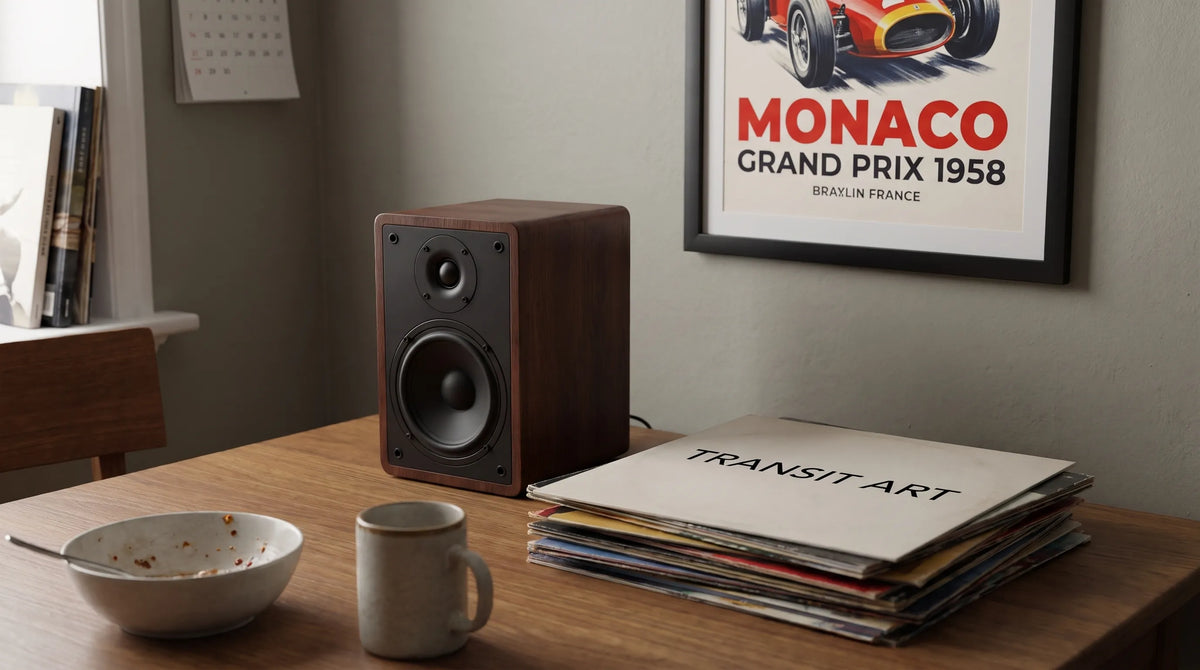
Transit Art’s Monaco Grand Prix 1958 poster shows a red race car against a yellow and gray background. The illustration brings movement into the room, while the limited palette provides clear colors to coordinate with furniture and record storage.
The listing describes a giclée print on 200 gsm museum-quality matte paper. Treat it as a paper-print option when planning the display; do not assume that this particular design is also available on canvas.
For a listener who also enjoys automotive history, the subject makes the room feel personal. Its appeal comes from the intersection of racing culture and graphic design, rather than a requirement to match the artwork to a particular musical genre.
Turning “posters canvas” inspiration into a listening-room palette
A successful listening room gives the eye somewhere to settle. Begin with one main artwork, then let a few of its colors recur elsewhere. This creates a connection between the wall, furniture and objects without making everything match.
Use the Monaco palette selectively
The poster’s gray can connect with speaker cabinets, a rug or metal equipment stands. Yellow brings warmth to an otherwise restrained room, while the red car supplies a concentrated accent.
You do not need all three colors in your furnishings. In a room with walnut storage and cream walls, the artwork may provide enough color by itself. With black shelving and pale walls, a small red object or warm-toned cushion can establish a subtle connection.
Keep the surrounding wall relatively quiet if album covers are already on display. A large collection of colorful sleeves plus several bold posters can divide attention across too many competing focal points.
Choose frames that support the room
A slim black frame can connect a graphic print to dark audio equipment. Natural wood can soften a room containing substantial metal shelving or black speaker cabinets. Choose the finish in relation to the furniture, not simply the darkest color in the image.
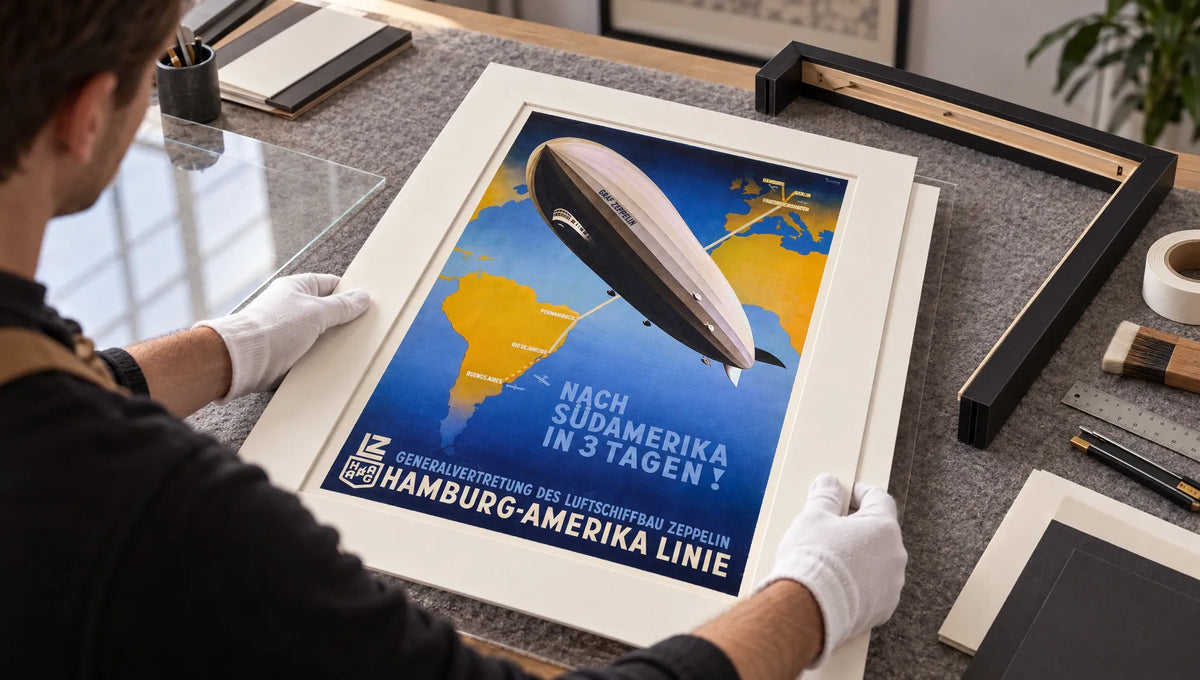
For paper prints, a mat creates breathing space between the illustration and frame. Transit Art’s guide to choosing mat borders for paper posters explains the measurements and material considerations worth checking before ordering.

Position artwork around the listening setup
Settle the speakers and listening chair before deciding where the art belongs. Otherwise, an attractive wall arrangement can encourage compromises in the room’s primary purpose.
If you use acoustic panels or have identified reflection points, reserve those locations for the appropriate treatment. Do not cover an absorber with a glazed frame or assume that ordinary printed canvas offers equivalent sound absorption.
Judge height from your seat
Standing eye level is not always the best reference in a room used mostly while seated. Tape a paper template to the wall, sit in your usual position and assess the whole composition. The artwork should relate comfortably to the cabinet or sofa beneath it without appearing squeezed against either.
For a display above seating, the advice on hanging living room art prints above a sofa provides a useful starting point. Adapt the arrangement to your furniture and leave practical clearance around equipment.
Test reflections during an evening listening session
A frame that looks clear in daylight may mirror a table lamp after dark. Check the proposed location with your normal listening lights switched on and from the chair where you spend the most time.
Matte paper does not eliminate reflections from glazing. Anti-reflective glazing can help, but compare its cost and appearance before committing. With posters and canvas alike, positioning the artwork away from direct light is often the simplest first step.
Recommended Poster Pairings
Use the Monaco print as the anchor rather than adding several equally dominant images. When browsing Transit Art’s transport-inspired collection, the following combinations offer useful directions for selecting a companion from the available designs.
Monaco with a quieter vintage car poster
Look for another automotive print with more open space, a restrained background or a smaller area of strong color. The shared subject creates continuity, while the difference in visual density gives the arrangement rhythm.
This pairing suits the wall above a long record cabinet. Keep the frame finish consistent and test both pieces together before choosing sizes. Matching outer frame heights can make different image proportions feel orderly.
Monaco with a train or aviation poster
For someone whose interests extend beyond racing, a train or aircraft subject can connect the display through travel and engineering rather than one vehicle type. Select a companion that repeats gray, warm yellow or another color already present in the room.
This approach works well across separate walls: Monaco above the record storage and the companion near a reading chair. The pieces can share a palette without needing identical dimensions or layouts.
Check print quality, total cost and care
Large artwork needs to hold up at the distance from which you will see it. A print across the room is experienced differently from one beside a chair, where lettering and edges are easy to inspect.
For detailed designs, review the available close-ups or ask for clarification about reproduction quality. Enlarging a small website preview does not reliably show how the finished print will look. Canvas texture also changes the appearance of fine detail, so choose it because you like that surface rather than assuming it is inherently more premium.
Compare the total display cost, including framing, glazing, mounting, shipping and suitable hardware. An inexpensive unframed print and a ready-to-hang piece are not equivalent purchases.
Neither posters nor canvas automatically wins on longevity. Materials, mounting and the room’s conditions all matter. Keep artwork out of direct sunlight, away from damp areas and clear of heat from audio equipment. Dust frames gently and follow the supplier’s care instructions; do not spray cleaning liquid onto the print or canvas.
Frequently Asked Questions
Is canvas better than a framed poster for a listening room? Neither is universally better. Canvas adds texture and often avoids glazing, while framed paper suits crisp graphic work and a collected, archival appearance. Choose around the artwork, lighting and available wall space.
Will canvas artwork improve the acoustics? Ordinary decorative canvas should not be treated as an acoustic absorber. If the room needs sound treatment, select purpose-designed products and plan the artwork around them.
Can I mix posters and canvas on the same wall? Yes. Connect them through color, subject or aligned edges. A clear main piece and a quieter companion usually feel more intentional than several unrelated formats competing for attention.
Build the room around what you enjoy
A listening room works best when its art reflects the person using it. For a motorsport enthusiast, the Monaco Grand Prix 1958 print offers a connection between racing heritage, graphic design and the pleasure of collecting.
Begin with the listening position, test the artwork’s scale and check the lighting before choosing the final display. One thoughtfully framed print can give the room more character than a crowded wall, while leaving the music firmly at the center.