Artikel: Race Car Art That Brings Track-Day Energy to Your Decor
Race Car Art That Brings Track-Day Energy to Your Decor
Track days are sensory before they are technical: hot brakes, metallic reflections, painted curbs, exhaust heat and the brief silence before a car launches out of a corner. That is why race car art works so well beyond the garage. It lets a room borrow the mood of the circuit without needing trophies, neon signs or heavy memorabilia.
For Transit Art, motorsport imagery is not only about speed. It is about form, engineering and atmosphere. A close view of an exhaust stack can say as much as a full car in motion, especially when the subject is a Mercedes racing machine and the hand behind the image understands both design and drama.
Why race car art brings energy without overwhelming a room
Automotive prints have a useful quality in interior design: they carry movement, but they remain visually structured. Curves, wheels, body panels and racing numbers create rhythm. Metallic greys and deep shadows add sophistication. A well-chosen print can make a quiet living room feel more personal or give a home office the focus of a pit lane.
Good race car art is rarely just a picture of a fast vehicle. It captures anticipation. Sometimes that means the angled stance of a car waiting in the pits. Sometimes it is a cropped mechanical detail, such as an intake, wheel arch or exhaust pipe. These fragments appeal because enthusiasts recognize the engineering, while design-minded viewers respond to proportion, texture and composition.
| Visual element | Interior effect | Best placement |
|---|---|---|
| Silver bodywork | Clean, refined and architectural | Office, hallway or minimalist living room |
| Red or yellow accents | Energy and contrast | Gallery wall or entertainment space |
| Workshop setting | Warmth, nostalgia and storytelling | Garage lounge, study or reading corner |
| Cropped mechanical detail | Abstract, sophisticated and collector-focused | Desk wall, library or studio |
The story behind the Mercedes racing machines
Mercedes-Benz has a rare place in motorsport history because its racing cars often feel like engineering statements first and sporting objects second. The marque's best competition cars were not decorated to hide their purpose. They were shaped by speed, endurance and mechanical clarity.
Mercedes W-196: Formula One precision in metal
The Mercedes W-196, more commonly written in period history as the W 196 R, competed during the 1954 and 1955 Formula One seasons. Built for the 2.5-litre Grand Prix regulations, it combined advanced fuel injection, careful aerodynamics and an unmistakably purposeful presence. Juan Manuel Fangio won world championships with Mercedes in both seasons, giving the car a reputation that still carries weight among racing historians.
The W-196 is a natural subject for race car art because every visible part looks intentional. The exhausts, bodywork and cockpit do not need embellishment. In a cropped composition, even a stack of pipes becomes a portrait of performance. It reminds viewers that speed is not only found in the driver or the lap time. It is built into every bracket, bend and polished surface.
Mercedes 300 SL: the road car with racing blood
The Mercedes 300 SL arrived in the 1950s and became one of the most admired sports cars of the twentieth century. Its famous gullwing doors made it instantly recognizable, but the reason enthusiasts still revere it goes deeper. The production car was closely connected to Mercedes racing development, particularly the W194 competition car, and it brought advanced engineering to the road with a lightweight frame and direct fuel injection.
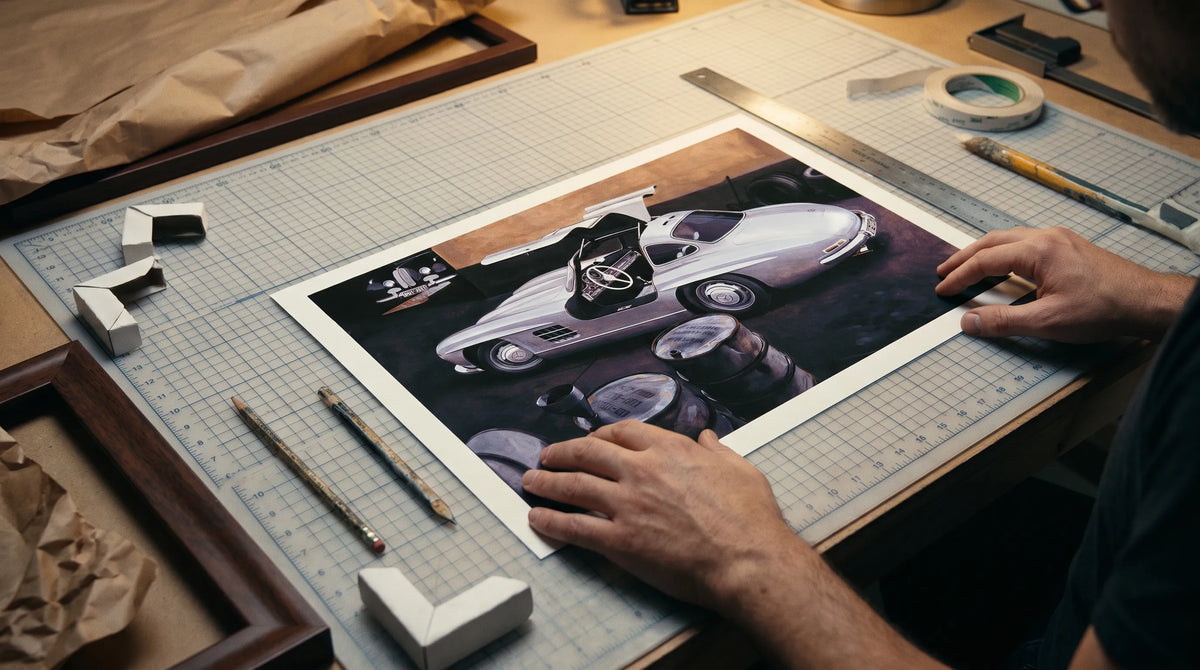
A workshop scene suits the 300 SL especially well. Unlike a pure action image, it lets the viewer slow down and appreciate the long bonnet, sculptural roofline and sense of craftsmanship around the car. In a home, that kind of automotive artwork feels cultured rather than loud. It is ideal for collectors who love performance history but prefer interiors with restraint.
Sune Envall's 1976 gouache and the beauty of hand-rendered speed
The exhaust-stack composition has special character because Sune Envall created the original painting in gouache in 1976. Gouache is an opaque water-based paint with a matte finish, often valued by designers and illustrators because it can create crisp edges, dense color and controlled highlights. Before digital rendering became standard, this kind of hand work was essential for communicating machines with accuracy and atmosphere.
Envall's approach belongs to a tradition where the artist did not simply copy a vehicle. He interpreted its engineering. The choice to focus on the W-196 exhaust pipes turns a racing car into an almost abstract study of rhythm and heat. Curved tubes overlap like a mechanical drawing brought to life, and the shadows suggest both workshop intimacy and trackside pressure.
That is the strength of race car art made by someone who respects the machine. The image does not need smoke, a blurred background or dramatic typography. The drama is already there in the object. Envall's 1976 gouache feels relevant today because it bridges two worlds: motorsport heritage and carefully observed design.

Styling track-day energy at home
The easiest mistake with motorsport decor is treating every wall like a paddock banner. A room feels more considered when racing imagery is edited. Choose one strong focal print or build a small gallery wall with related subjects, then let furniture, lighting and negative space do the rest.
For a living room, race car art works best when colors connect to materials already in the space. A silver Mercedes print pairs naturally with chrome, brushed steel, black leather, walnut, concrete or pale Scandinavian woods. If the artwork includes warmer workshop tones, echo them through brass lamps, tan leather or oak shelving.
Living rooms and lounges
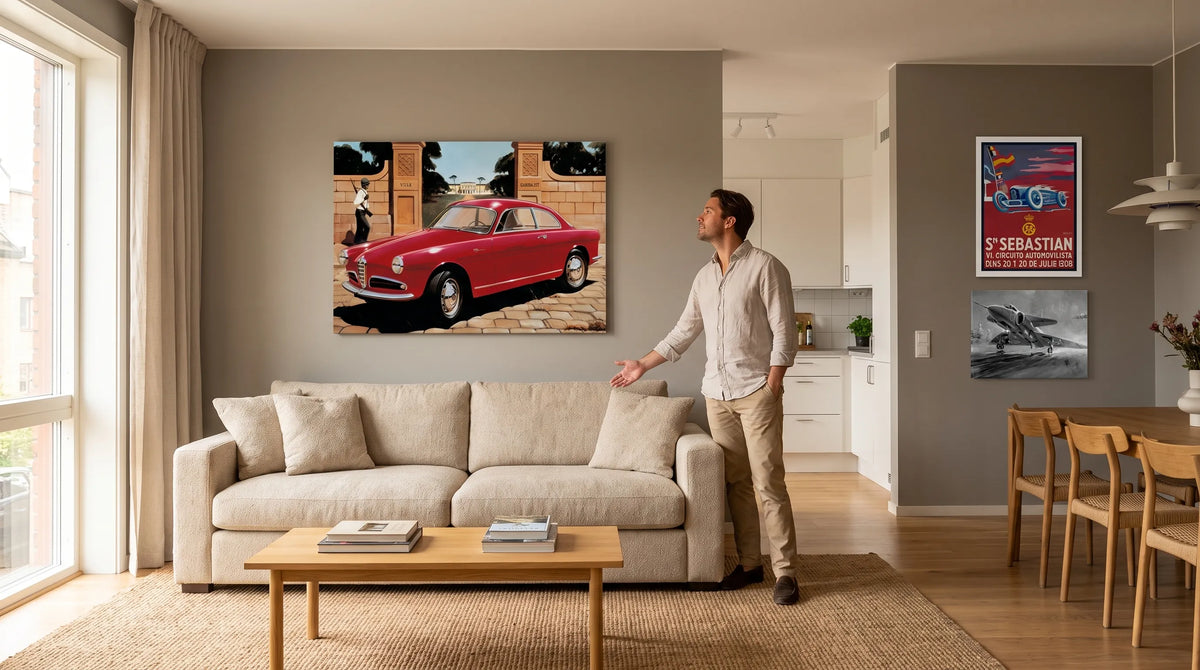
In a living room, hang a motorsport print where it can be read from a distance. Above a sofa, sideboard or record cabinet, a horizontal racing image can create a cinematic line. A vertical print, by contrast, feels more like a collector's piece and works beautifully between windows or beside a reading chair.
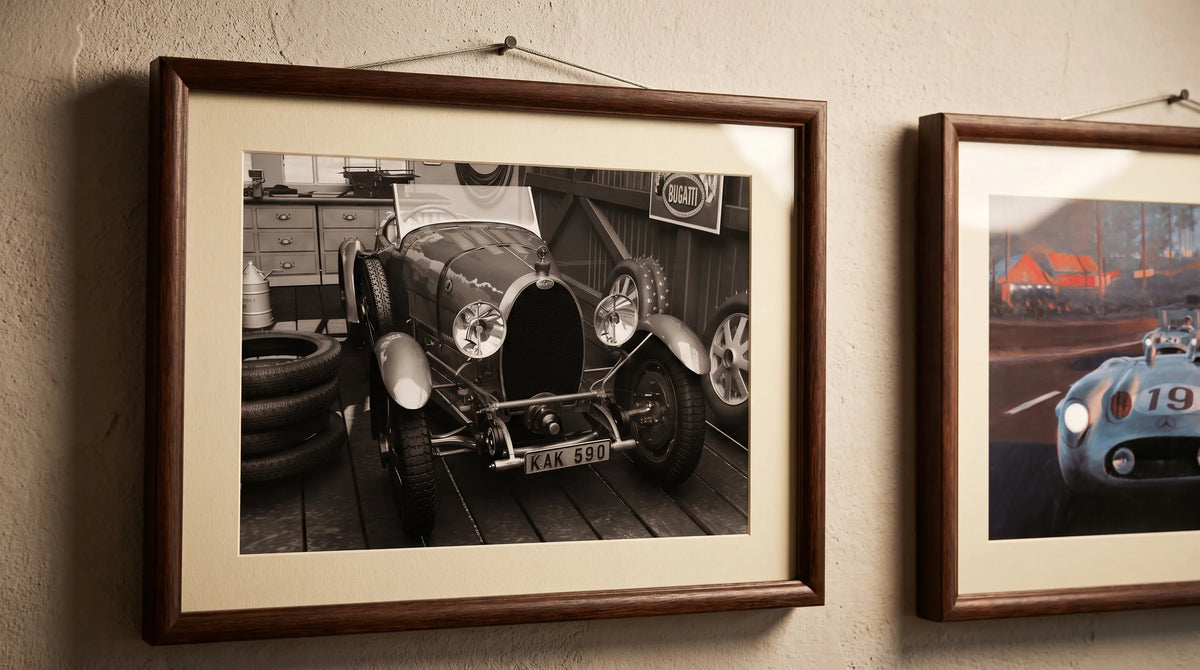
Keep the frame simple. Black, natural oak and dark walnut are the safest choices for automotive wall art because they support the subject without competing with it. A white mount can make detailed mechanical imagery feel more gallery-like, especially in interiors that lean minimalist.
Home offices and studios
A home office can handle more intensity. This is where cropped engineering details, pit-lane scenes and endurance racing posters feel especially natural. They bring concentration and ambition into the room without becoming corporate. If your desk faces a wall, one detailed motorsport print can create a focused visual anchor.
For enthusiasts, the emotional value matters too. Displaying a W-196 detail or a 300 SL workshop scene is a quiet way of keeping automotive history close. It says something about taste, curiosity and mechanical appreciation, not just fandom.
Recommended Poster Pairings
A good automotive gallery wall should feel curated rather than crowded. The following Transit Art pieces work well together because they share themes of performance, workshop atmosphere and racing heritage while offering different visual rhythms.
| Poster | Why it complements the theme | Ideal room placement |
|---|---|---|
| Mercedes W-196 Exhaust Stack | This detailed view of Mercedes W-196 exhaust pipes brings an almost abstract mechanical focus, making it the most design-led piece in the group. | Above a desk, in a studio or as the central print in a motorsport gallery wall |
| Mercedes 300 SL at Workshop | The workshop setting adds warmth and narrative, balancing the intensity of pure racing imagery with classic Mercedes elegance. | Living room, garage lounge, hallway or beside a reading chair |
| German Rivals | The Auto Union Type D subject expands the story into historic German competition and pairs well with silver, black and industrial interiors. | Gallery wall with other classic racing prints or a collector's office |
| LeMans Night | The Panoz LMP-1 theme introduces endurance-racing atmosphere and a darker, modern mood that contrasts beautifully with vintage Mercedes subjects. | Media room, home office or dramatic hallway display |
Together, these prints create a layered view of race car art: classic engineering, workshop storytelling, historic rivalry and night-race endurance. The mix is especially effective if you keep the frames consistent and vary the sizes. One large focal print with two or three smaller companions often looks more intentional than four identical formats.
Choosing colors, frames and spacing
For a clean modern interior, start with the dominant color in the print. Silver Mercedes subjects are versatile because they sit comfortably with monochrome, grey, navy, forest green and warm neutrals. If a print includes red brake lights, yellow headlamps or warm workshop lighting, use those tones sparingly elsewhere in the room.
Spacing matters as much as the artwork itself. Leave enough wall around each print for the image to breathe. In a gallery wall, align either the top edges or the centerline of the frames so the arrangement feels deliberate. If you are mixing car subjects from different eras, a consistent frame color will tie the collection together.
Transit Art prints are designed for people who want automotive passion to live comfortably inside the home. The gallery-quality poster finish and FSC-certified paper support that idea: the artwork can feel like part of the room, not a temporary garage poster brought indoors.
Frequently Asked Questions
What rooms work best for race car art? Home offices, living rooms, hallways and garage lounges are ideal. The key is choosing artwork that fits the room's tone, such as a refined Mercedes detail for a study or a dramatic endurance print for a media space.
How do I make motorsport posters look sophisticated? Use simple frames, limit the number of colors in the surrounding decor and give each print enough space. Cropped mechanical details and classic racing subjects often feel more refined than overly busy action scenes.
Can automotive art work in minimalist interiors? Yes. Minimalist rooms often benefit from one strong subject with clean lines and a restrained palette. Silver cars, black frames and white wall space create a sharp but calm effect.
Why is Sune Envall's 1976 gouache significant? The gouache medium gives the W-196 exhaust study a hand-rendered precision that feels different from digital illustration. It captures engineering detail, surface and atmosphere through the discipline of traditional painting.
Bring the circuit into your space with intention
The appeal of track-day decor is not only speed. It is the feeling of design under pressure: machines built for purpose, surfaces shaped by airflow and details that reward close looking. When chosen carefully, automotive artwork can make a room feel sharper, more personal and more alive.
For enthusiasts who appreciate Mercedes heritage, Sune Envall's 1976 gouache and the stories behind the W-196 and 300 SL offer more than decoration. They bring a piece of racing culture into daily life, framed in a way that suits modern interiors.