Artikel: What Determines the Price of Art Prints?
What Determines the Price of Art Prints?
What Determines the Price of Art Prints?
An art prints price comparison is only useful when you know what each listing includes. Two prints showing a similar subject can cost different amounts because of their materials, dimensions, production methods and edition details. Framing and delivery can widen that gap further.
For transport enthusiasts, there is another consideration: whether the artwork captures something worth living with. A racing illustration might recall a favorite event, while a vintage motorcycle poster brings the lettering and atmosphere of another era into a room. Understanding the costs helps you choose deliberately, without assuming that the cheapest print is poor quality or the most expensive one is automatically better.
Materials and production: what you are paying for
Paper, canvas and surface finish
The surface beneath an image affects both its appearance and its production cost. Paper weight, texture, coating and composition all matter, but none should be judged in isolation.
A heavier sheet can feel substantial without necessarily offering better image reproduction or long-term stability. Smooth paper can suit crisp automotive illustrations, while textured paper may complement artwork with a more painterly appearance. Canvas introduces a visible weave and, when supplied stretched, adds construction costs beyond the printed surface.
Transit Art offers posters printed on FSC-certified paper with a gallery-quality finish, alongside canvas wall art. The FSC labeling system concerns responsible sourcing and the use of certified or recycled materials. It does not, by itself, establish a print’s resistance to fading.
For a useful art prints price comparison, look for specific material information rather than relying on words such as “premium.”
Printing method and image preparation
Printing costs depend on the equipment, ink system, production quantity and work required to prepare the image. Color correction, cleaning up a historical source and checking fine details can all contribute to the finished product.
“Giclée” generally describes inkjet fine-art printing, but the term alone does not establish quality. The combination of ink, paper, source-image resolution and production control matters more than the label.
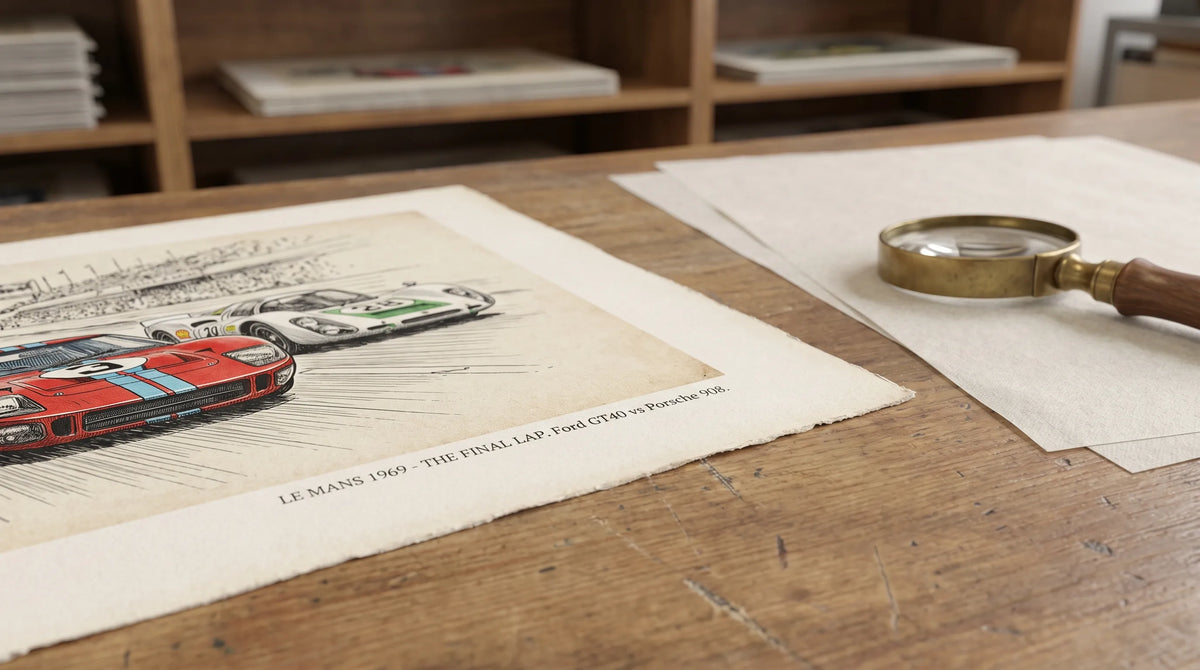
For automotive artwork, examine details such as wheel outlines, lettering and bodywork contours. A larger sheet cannot restore detail missing from the source image. Likewise, vintage artwork may retain texture or imperfections intentionally, so distinguish character in the original design from unintended blur in the reproduction.
How size and editions affect an art prints price comparison
Larger dimensions change more than the paper bill
Larger prints use more material and may require different equipment, packaging or handling. However, price does not necessarily increase in direct proportion to surface area: setup and fulfillment costs also influence the result.
The bigger practical difference can appear after purchase. A large print may require a more expensive frame, glazing or installation solution. An unusual format can also limit your choice of ready-made frames.
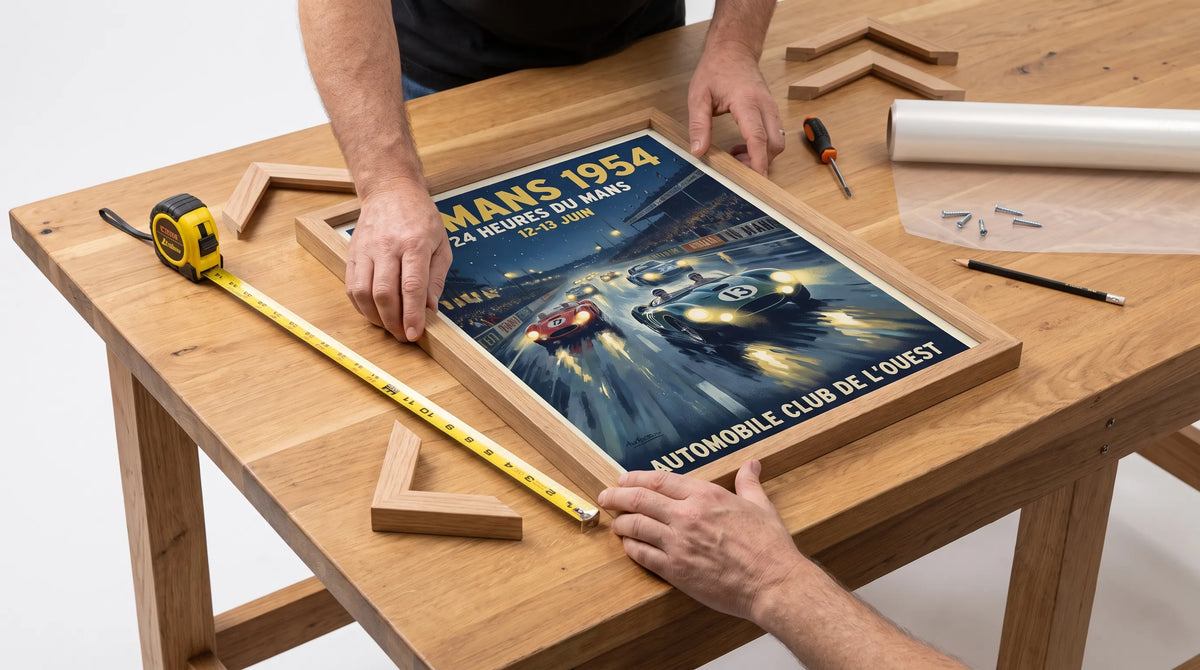
Transit Art offers multiple poster sizes. Before choosing one, measure the intended wall and consider the outer dimensions of the finished frame, not just the artwork. A modest print with a generous mat can occupy more space than its listed dimensions suggest.
Artist involvement, licensing and edition size
An art print may reproduce an existing work or be created as an original editioned artwork. Those are different propositions, and the product description should make the distinction clear.
An open-edition reproduction can be well made and visually satisfying. A numbered edition may cost more because availability is restricted, particularly when it includes an artist’s signature or documented production details. Neither numbering nor a signature guarantees future resale value.
Artist reputation, image licensing and restoration work can also affect the price. A reproduction is not the same object as the original artwork it depicts, even when the image is familiar.
If collectibility matters, check who produced the edition, how many copies exist and what documentation accompanies it. If decorating is your priority, image quality and suitability for your room may deserve more weight.
Compare the complete cost, not just the listing
A fair art prints price comparison includes the cost of getting the artwork onto your wall. An unframed poster and a ready-to-hang piece are not equivalent purchases, even if they have similar dimensions.
| Cost component | What to check | Why it matters |
|---|---|---|
| Selected size, material and finish | A displayed starting price may apply only to the smallest option | |
| Frame and mat | Whether they are included and what dimensions fit | Presentation can represent a substantial part of the budget |
| Delivery | Destination, packaging and shipping charges | Larger or heavier items may cost more to transport |
| Taxes or import charges | Checkout information and local requirements | The final amount can differ from the initial listing |
| Installation | Suitable hooks, anchors or professional help | Wall construction and framed weight affect mounting needs |
For illustration only, a $40 print paired with a $35 frame and $10 mat totals $85 before shipping or taxes. These are hypothetical figures, not Transit Art prices.
Compare products in the same currency and at the same size. Then check whether framing, delivery or any promotion changes the actual amount payable.
Why transport artwork offers more than a decorative image
Transport posters draw on a visual history of advertising, travel and competition. Vintage designs often combine distinctive lettering with strong silhouettes and simplified backgrounds, making them effective wall art as well as records of their era.
Motorcycle racing artwork can appeal to riders through its depiction of motion, machinery and event culture. Automotive racing illustrations attract enthusiasts who recognize a stance, a livery or the atmosphere of a circuit. For other viewers, the appeal may simply be the composition and color.
An art prints price comparison cannot measure that personal connection. It can, however, help you separate emotional appeal from unsupported claims about rarity or investment value.
The most rewarding purchase is often a well-produced image you genuinely want to see every day, rather than a supposedly collectible print chosen only because its description sounds impressive.
Interior design: spend where it changes the room
Choose scale and placement before upgrading finishes
A thoughtfully sized print can have more impact than a costly piece that looks lost on its wall. Use a paper template to test the proposed framed dimensions above a desk, console or sofa before ordering.
In a restrained interior, one larger transport print can provide a focal point without requiring several smaller purchases. For a gallery wall, establish one shared feature, such as matching frames, related subjects or a recurring accent color.
A black frame can emphasize graphic outlines and lettering. Light wood may soften an industrial subject, while a mat creates breathing room around a visually busy composition. None of these choices needs to be expensive to look intentional.
Protect the purchase without overspending
Keep prints away from prolonged direct sunlight and areas exposed to moisture. Protective glazing can reduce some light-related damage, but it does not make artwork immune to fading.
If you are deciding where to allocate your budget, prioritize appropriate dimensions, sound framing and a suitable location before paying for decorative extras. Transit Art’s guide to creating a gallery-quality look with prints on paper explores how presentation influences the finished result.

Recommended Poster Pairings
A two-print arrangement offers a manageable starting point for a transport-themed gallery wall. Choose the actual designs together rather than assuming that any two vehicle posters will coordinate.
Automotive racing poster: the visual anchor
Start with an automotive racing design from Transit Art’s bestselling poster collection. Look for a composition with a strong vehicle silhouette and a clearly identifiable accent color.
This makes a useful anchor above a home-office desk or living-room console. If the artwork contains detailed scenery or prominent lettering, give it enough wall space to remain readable. Select the size based on the furniture beneath it, then reserve part of the budget for a frame that supports the composition rather than competing with it.
Vintage motorcycle racing poster: the companion piece
Choose a complementary design from Transit Art’s motorcycle poster collection, which includes vintage event imagery, advertising artwork and motorcycle illustrations.
Match one or two visual characteristics with the automotive print: a similar background tone, repeated accent color or comparable amount of lettering. The subjects can differ while the presentation remains cohesive.
This pairing suits an enthusiast’s study, a hallway or a shared living space where a broader motorsport theme feels more balanced than repeated images of one vehicle. Matching frames help connect the pieces, even when their original artwork comes from different periods.
Before ordering, make your art prints price comparison across both selected sizes and the full framing plan. Two inexpensive prints can become a costly project if each requires a custom frame. Conversely, a coordinated pair in compatible standard sizes can create a polished display without unnecessary extras.
Frequently Asked Questions
Are expensive art prints always better? No. A higher price may reflect larger dimensions, framing, licensing, limited availability or artist involvement. Compare those features with your needs rather than using price as a stand-in for quality.
Are art prints valuable? They can have decorative, personal or collectible value. Financial value depends on factors such as the artist, edition, provenance, condition and buyer demand. An ordinary reproduction should not be treated as a guaranteed investment.
How can I print artwork cheaply? For artwork you own or have permission to reproduce, use a standard size and compare local or online printing options. Request a small test before ordering a large print. Basic document printing may be suitable for temporary displays but is not equivalent to a specified fine-art printing process.
How much does it cost to print artwork at Staples? The amount depends on the service, dimensions, paper and location. Check the current local quote and confirm whether it includes the material and finish you want. A commercial printing quote is not directly comparable with a finished artist or retailer product.
What should I check first when comparing prices? Start with dimensions and what is included. Your art prints price comparison becomes much clearer once every option is assessed at a comparable size, material and level of presentation.
Choose a print for the wall you actually have
The right budget balances the image, its production quality and the cost of displaying it well. For a transport enthusiast, a poster can also bring a favorite aspect of automotive or motorcycle culture into everyday surroundings.
Choose the subject that holds your attention, measure its intended space and compare the complete cost. That approach makes it easier to select artwork for lasting enjoyment rather than a low headline price or an unsubstantiated promise of value.